3049 Miller Road
Ann Arbor, MI 48103
Ann Arbor Surgical Error Lawyer
Strategic Surgical Error Lawyer in Ann Arbor, MI
Surgical errors and mistakes injure and kill thousands of patients every year, ranging from cases where surgical instruments, sponges and needles were left inside a patient to stories where the wrong patient was wheeled into the operating room, the wrong limb amputated or the wrong side of the body operated on (so-called “wrong-site” surgery). There are even incidences of patients catching fire while being cauterized (when an opening is burned shut).
Many types of surgical errors have now tabulated in the National Quality Forum’s list of “never events,” events that should never take place in a health care setting. Never events don’t happen often — but if you were the patient harmed, it could impact the rest of your life, or even take your life. Call our office today at 734-545-8421 to discuss your options with a lawyer.
Types of Surgical Errors
Surgical negligence doesn’t happen just in the operating room. Examples include:
- Failing to provide the patient with adequate preoperative information, including risks or alternative treatments (lack of informed consent)
- Failing to perform appropriate preoperative testing
- Failing to obtain appropriate preoperative clearance
- Performing an unnecessary procedure
- Failing to timely recognize post-operative complications or infections
- Failing to seek timely medical or specialist consultation
Errors occurring inside the operating room include:
- Performing an operation on the wrong part of a patient’s body
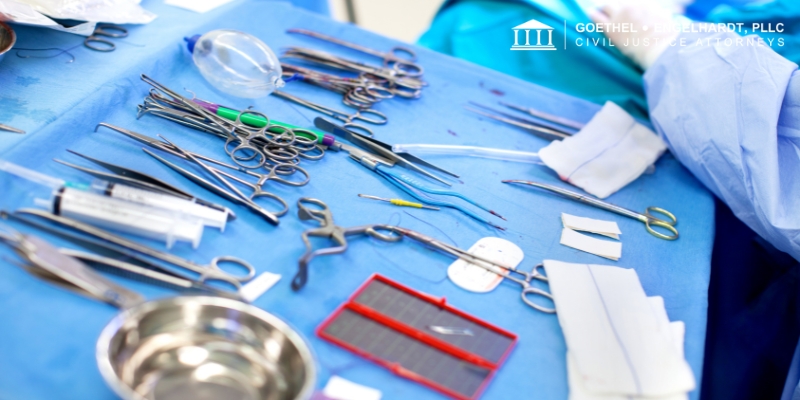
- Leaving improper surgical materials inside a patient’s body
- Anesthesia errors
- Neglecting to monitor vital signs such as heart rate or blood pressure
- Causing damage to gall bladder or other internal organs during the course of an open, diagnostic or laparoscopic surgery and failing to detect it
- Causing infections through the use of unsterile surgical instruments or practices
- Back and neck surgery errors
The Importance of Vigilance
Since most surgery occurs under anesthesia, the patient has no awareness of what took place. Patients, families and loved ones are, in turn, dependent on the surgeon to inform them of any complications or errors that occurred. Tragically, recent studies indicate that the vast majority of surgical errors and mistakes are never disclosed.
In fact, a 2012 report of the Office of Inspector General under the Department of Health and Human Services found that hospital employees report only 14 percent of medical errors and usually don’t change their practices to prevent future mistakes. While proposed new DHHS rules would encourage more reporting, they still don’t require that the information be made public.
The 2012 OIG study builds upon a previous study published in 2010 that painted a discouraging picture of care gone awry in hospitals. That study found that 13.5 percent of hospitalized Medicare patients experienced adverse events ranging from pulmonary embolisms to wrong body part surgery. Another 13.5 percent experienced temporary harm events such as excessive bleeding and prolonged nausea.
FAQs About Ann Arbor, MI Surgical Error Law
When do I have to file?
In Michigan, you have to file your medical malpractice suit within two years of the negligent act or malpractice. We suggest you get in touch with our office as soon as possible if you suspect a medical error. The more time that passes between the surgery and your contact with us, the less time we have to perform a proper investigation to determine if you have a claim we can pursue for you.
What does compensation cover?
When you file a medical malpractice suit, your compensation is based on a variety of factors. Significant factors include the cost of medical care expenses, loss of wages and future earnings, projected medical costs, together with pain and suffering or noneconomic damages.
What do we have to prove?
During our investigative process, we will look for negligence on the part of the doctors, nurses and other professionals involved in your surgery. Based on the injury you have sustained, this could be a short or a lengthy process. There are certain standards medical professionals must follow when performing surgery, and if these were not followed that is when a suit should be filed.
Contact Our Ann Arbor Surgical Error Attorneys For A Free Consultation
For any surgical patient who dies or suffers a significant injury during or after the surgery, a careful review of the entire medical record is required, not just the surgeon’s operative report. This includes the entire operating room record, anesthesia record, post-operative care unit (PACU) record, and pathology reports together with all records of post-operative care. Please contact our office to speak with an Ann Arbor Surgical Error attorney if you feel you or a loved one was the victim of a surgical error or mistake.
Serving Ann Arbor and Washtenaw County, Michigan
Medical negligence can leave patients and their families facing additional treatment, permanent disabilities, lost income, overwhelming expenses, or the loss of a loved one. Whether the harm resulted from a diagnostic failure, surgical mistake, anesthesia complication, birth injury, hospital infection, or another breakdown in care, determining what happened requires a detailed investigation. Goethel Engelhardt, PLLC represents patients and families in Ann Arbor with focused legal guidance and extensive experience handling medical malpractice and serious injury litigation.
The firm investigates claims involving physicians, nurses, surgeons, anesthesiologists, hospitals, emergency departments, and other healthcare providers. Ann Arbor is home to major medical institutions, including University of Michigan Health and Trinity Health Ann Arbor Hospital, making it an important regional destination for emergency care, surgery, cancer treatment, maternity services, and specialized medicine. Medical malpractice lawsuits arising in the area may proceed through the Washtenaw County Trial Court, located on East Huron Street in downtown Ann Arbor. Goethel Engelhardt, PLLC helps clients evaluate medical records, consult appropriate experts, and determine whether the care provided complied with the applicable professional standard.
The firm serves clients throughout Downtown Ann Arbor, Kerrytown, Burns Park, Lower Burns Park, Water Hill, Old West Side, Northside, and surrounding communities such as Ypsilanti, Saline, Dexter, Chelsea, and Pittsfield Township. Whether a case involves a delayed diagnosis, surgical injury, preventable infection, medication mistake, or negligent obstetrical care, experienced representation can make the difference between unanswered questions and a thoroughly investigated claim seeking accountability for preventable harm.
Helping Patients and Families Throughout Ann Arbor
Ann Arbor is a major healthcare and research center serving patients from across Washtenaw County and southeastern Michigan. Families receiving care near the University of Michigan Medical Campus, C.S. Mott Children’s Hospital, downtown Ann Arbor, and the broader Washtenaw Avenue corridor may face complex questions when treatment results in unexpected harm. Goethel Engelhardt, PLLC helps injured patients and their families understand their legal options and pursue claims involving serious medical negligence.
Ann Arbor, MI Surgical Error Law Additional Resources:
Testimonials

I had the pleasure of working with Steve and Michelle. They constantly kept us up to date with everything and…
A R
All in all, I had a warm, good experience during an absolutely awful time in my life. Chad, Jen and…
Kate Wesley
Recently spoke with this lawfirm about my son situation and they have already made me and my son feel like…
Keycoded
The entire team, and specifically Chad & Jen, were so helpful and compassionate during a very challenging time for our…
Jennifer TenHaaf
I cannot say enough positive things about Chad Engelhardt and the staff at Goethel Engelhardt, PLLC! Professional, Ethical, Helpful, Kindhearted,…
Christine C
Professionalism, Quality, Responsiveness, Value
Amy B
Very friendly and professional
Pat Z
They treat you like family
Breanne S
Very helpful, informed, and advocate for their clients. I would highly, highly recommend, Jennifer is amazing and her team help…
Megan C
Goethel Engelhardt, PLLC
3049 Miller Road
Ann Arbor, MI 48103
Map
Request A Consultation
Call us at (734) 769-6838 OR Use the
form below to Request a free case evaluation.

Goethel Engelhardt, PLLC
3049 Miller Road,
Ann Arbor MI 48103
Map
Free Consultation
Phone : (734) 769-6838
Fax: (734) 786-0706
© 2026 Goethel Engelhardt, PLLC. All rights reserved. Disclaimer | Site Map | Privacy Policy
*Images are obtained under license from Canva and other third-party stock image providers, with attribution included where required.
Digital Marketing By 